



The important “first coach”
The important “first coach” in the path of athletes
Research at the global level is looking for factors that sometimes have a positive and sometimes negative effect on the development and evolution of athletes. The effects of the family environment, the social data related to sports and the other factors that appear both in the introduction and in the course of the athlete are studied.
In the same context, the influence of coaches throughout the sports career is studied. Research focuses largely on the first coach the child will meet in his introduction to sports, thus highlighting his defining role.
The first coach is “responsible” to present the first image to the young athlete about the content of sports. It shows him how pleasant the sports environment can be (or the opposite), builds a framework that develops pleasant feelings, which will determine whether the child will stay both immediately and in the long term in the sports environment. If the first coach has a positive effect on the athlete, it is very likely that he will continue and stay in sports. The more positive the coach’s image, the more profound an effect it will have on the child’s emotional dimension.
A coach who presents himself as friendly and positive, with mobility and attitude, which shows his appetite to work with children (this element is strongly appreciated by children), inclined to help any child who needs it, with an interest in the child as a person and then as a future athlete, declaring acceptance for each child (avoiding to investigate “having it” or “not having it”), an element that will contribute to the development of the child’s self-esteem.
The behavior of the first coach seems decisive in basic concepts with which the child will structure the sports environment. He will cultivate respect, cooperation, consistency, the willingness to try, trust as he will identify with a role model who exhibits similar behavior. If he trusts the first coach, he is more likely to stay in the sport and at the same time the child himself will develop confidence in himself in the future.
If the athlete in the future continues in sports, if he receives useful information from sports, if he develops into a high-level athlete and if he finally exercises as an adult adopting exercise in his daily life, the first coach will have a decisive role. To develop one needs motivation and desire and the first coach is the one who shapes the environment to develop children’s desire for sports at an early age. If the athlete stars, he will owe a lot to the first coach. It helped him develop as a child a second very important quality, that of an athlete!
Yannis Zarotis
Psychologist-Sports Psychologist
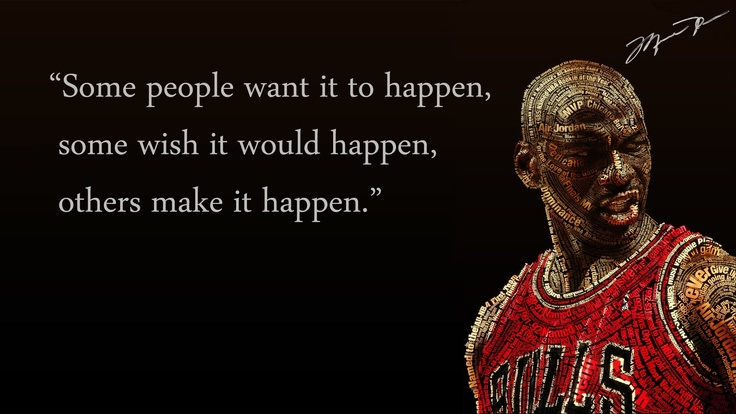
Success: Want, Must or Can?
Success: Want, Must or Can?
Human nature often pushes him to set goals, to seek new experiences and different conditions through which he manifests his desires and fulfills his “wants”.
Both daily activity and sports are fields in which every person seeks success. Whether it is the exams at school, or the participation in a competition, or even in adult life the development in the working environment.
The individual’s involvement in each field includes success as a goal, with each pursuing it as a “want”, “must” or “can”.
Often in sports it is heard that success is a person’s big “dream”, the satisfaction of his desires, his ambition that will satisfy his emotional side. “I want” expresses what could satisfy the person, what would bring him joy and pleasure. “I want” alone does not ensure success. It will need to be transformed into effort!
In many cases, success takes the form of “must”, making it “must”, without any alternative in case of failure. The athlete’s preparation towards the goal he “must” achieve will be accompanied by intense anxiety, while the failure to achieve it will be accompanied by guilt and a more general deconstruction of the whole effort: “I didn’t do what I should have”.
Even if I had to, the basis of success is “I can”. It states the individual’s abilities, the effort he has made, his improvement through his preparation and to achieve the “I can” goal meets the requirements of success.
“I want” is important as it indicates the motivation of the individual, it is the activating factor towards success, without it any effort would not start. “Must” appears to be an inhibitor to success, it creates a sense of obligation, success (if it comes) will bring more relief than pleasure as it is a stressful condition. Ultimately we are looking for the “I can”, this will reveal the desire of the person, as it comes with effort and a lot of work! It will fill the person with self-confidence and optimism and give him the corresponding physical and mental energy to achieve the goal.
It is important for the athlete not to dwell on “I want”, to see success as something pleasant and not obligatory, while developing his individual ability.
To achieve success “you must be able!”

Don’t blame the parents of the athletes, educate them!
Don’t blame the parents of the athletes, educate them!
The role of parents in sports is a key element for the subsequent development of children. They determine to a large extent how much support an athlete will have emotionally, how cooperative and receptive he will be towards his coach, how much effort he will put forth in every situation for his best possible performance. It is the parent who, as the first “educator” in the child’s life, will teach him the concepts of responsibility, consistency, respect for those around him, a positive attitude towards “third parties”, will create the basis for the development of self-esteem of the child, on which he will build his self-confidence, even in sports. All the information provided to the child is what his coach would ask for when working with young athletes.
The importance of the parent is also demonstrated by the fact that 3 out of 10 children are involved in sports because of their parents, who also “influence” the children’s choice of sport. 32% of children are motivated by their parents’ desire to participate in a particular sport, research shows.
At the same time, a percentage of between 65-75% of children who play sports, states that there have been moments in which they have experienced pressure from their parents. Pressure to succeed, expectation to improve, demand to win. In this case, they unwittingly “develop” stress in the athletes. As they will create similar issues by getting involved in training, giving instructions for the match, making countless analyzes about the match that the child did not go “well”, “asking for the reason” from the coach for the child’s lack of progress, arguing with other parents and always being one step ahead of the child trying to provide everything for him, sabotaging his autonomy.
In the end, the parents are a problem, says the coach, and certain research results also state this.
As much as they can negatively affect the development of the child, even more and perhaps more they could be the ideal ally in the athlete’s development effort. They are blamed for their attitude and general behavior, characterized as over-involved or over-protective. They may not be “right”.
Did anyone ever train them though? Has anyone ever informed them of what the “proper” attitude in sports really is? They entered a very demanding space, spending a lot of personal time and corresponding money, not knowing “what should I do when the match is over and the child is upset?”. At the same time, research shows that parents “spend”/invest 3-12% of their annual income on their child’s sports!
Watch training? Should I go to the games? To answer if he asks me “how did you see me?” Should I talk to the coach? Should I ask him about training and the match? These are some of the questions parents have. They express concern and concern, it is about “the most precious thing they have”: their own children.
We take it for granted that he knows how to help, but at the same time he is “unrelated” to sports. Something doesn’t fit…
If you don’t explain something to someone, don’t judge them. No one is evaluated on something they don’t know. The responsibility of educating parents “burdens” everyone, actors, coaches and those involved in sports. The child’s sport starts with the education of the parents!
Educate them, inform them and let them decide whether they are doing “good” or “bad” to their children. And either the parents or the child’s own development will “decide” whether it is good or bad!
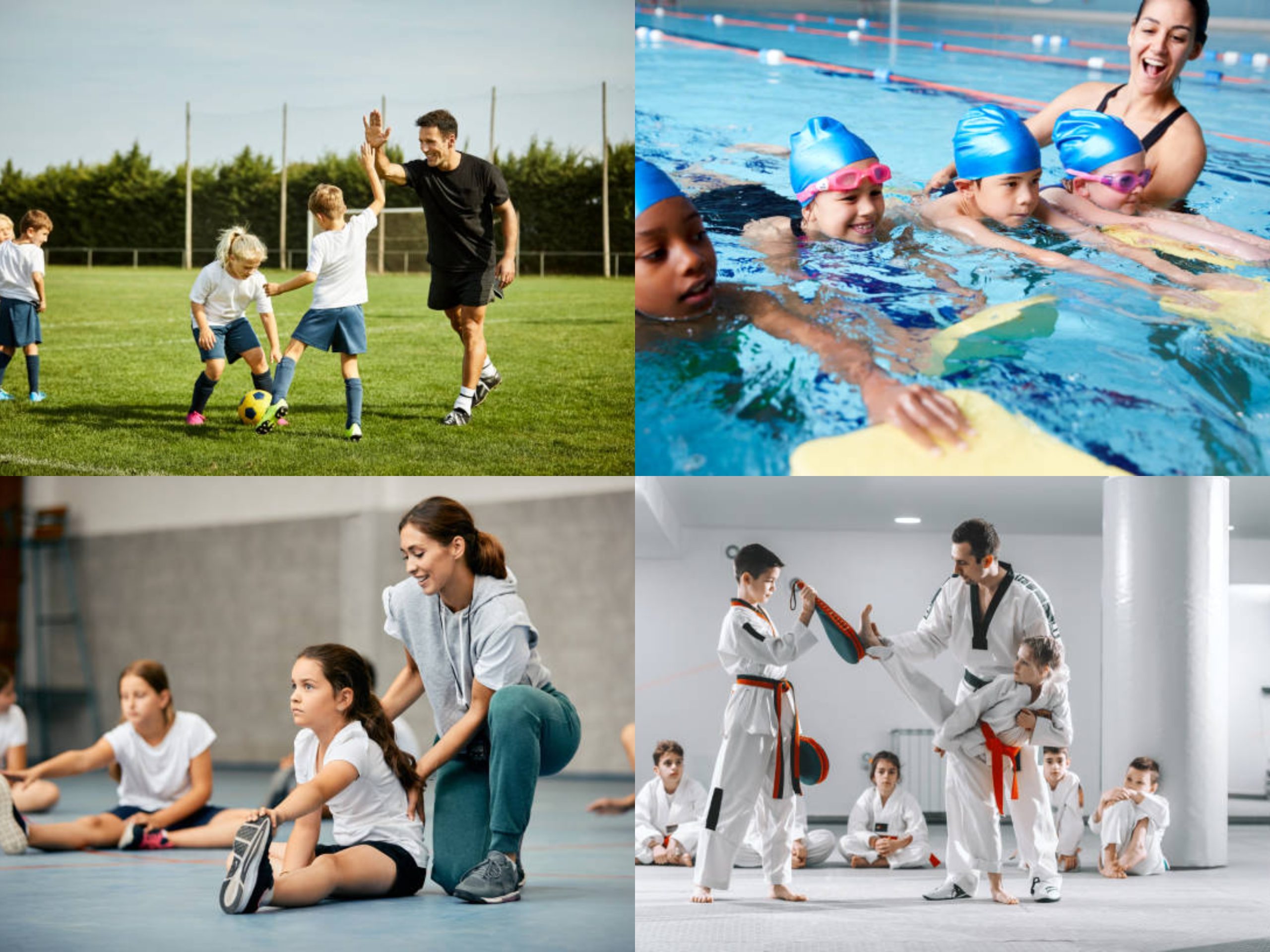
Το choose a club or a coach?
Children’s exercise, in any form, helps their development in the best way, either physically or psychologically and spiritually. It contributes to their physical health, ensures to a certain extent their energy/activity, cultivates elements of their later personality, educates and socializes the young “athletes”, creates the foundations for their mental balance and provides stimuli for the mental alertness-cultivation of child athletes.
Sports, which is an organized form of exercise in any sport, has the framework for obtaining the above benefits. The parents’ decision to introduce their child to sports creates questions and searches regarding which sport and club they will “choose” for their child and with what criteria.
Research shows that the main criteria for choosing a club by parents are the distance from their home, the time of training, the cost of the monthly subscription and the “image” they have formed from their information about the respective sports club .
On the other hand, the needs of child-athletes for play, coexistence with friends, fun, smooth and gradual entry into the sports environment appear as additional elements that need to be taken into account for the choice of sport and club.
Responding to what the research supports that the sports environment can offer and to the children’s wishes at the same time, it seems necessary to “control” the training environment of the club, with all that this implies, by the parents.
A key factor in the choice is the coach with whom the child will work, with what goals and objectives, in what form of behavior, in what way of communication. The coach is able to determine to a very large extent whether the child will stay in sports or not, whether he will have fun or be pressured, whether he will form healthy behaviors or internalize views and attitudes inhibiting his further psycho-spiritual development.
Parents, in the first stages of introducing children to sports, are asked to look for coaches who will offer the emotional support the children need, the corresponding behavior to experience pleasant emotions, “ensuring” to a certain extent the development of motivation and the stay of the children in the sports environment. They will look for coaches with a mild and positive attitude, having a willingness to communicate and above all the energy that the children also possess so that they can “follow” them.
Each club has a philosophy for sports, which is “reflected” almost entirely on its coaches, they are also the ones “delivering” its philosophy.
Ensuring the elements that sport offers is the point, the cost for the benefits can be 15 minutes more on the road or reconfiguring the family program based on the child’s training, however “ensuring” the child a multi-year presence in the sports environment with simultaneous pleasure and satisfaction from his participation. Having made the right choice of the person-coach in whom they will trust a lot of the child’s free time and will contribute to his development in all areas of his personality.
Perhaps in the end the answer to the question can be summed up in: “If you want to choose a club, choose the right coach!”
Yannis Zarotis MSc- PhD
Psychologist – Sports Psychologist

Athletic Performance: The Role of Psychological & Mental Factors
Athletic Performance: The Role of Psychological & Mental Factors
Every person, in whatever area they are active in, develops elements that help them to adapt and evolve. For each field of activity the “necessary” elements-characteristics vary, depending on the requirements of the conditions.
In the sports environment, the adaptation and success of athletes depends on factors that mainly concern physical and technical elements, as those that are “projected” more. Athletes train to develop their sport-specific components with greater emphasis on how to improve both their physical condition and technical knowledge.
Why, however, are they not in the same mood every day? What are the factors that determine their tolerance to exercise fatigue? Why do some understand better the instructions given and develop correspondingly better perception and speed of thought? Why do some athletes become “better” than others, while following the same training? And if someone is talented in technical or physical elements, will they necessarily reach the top? Because for many athletes, training is a high-performance environment, while in competition they find it difficult to “bring out” their best selves.
Research data and daily experience show that the athlete’s success “depends” on many Psychological and Mental factors as well as elements of his Personality.
Psychological includes motivation, self-confidence, stress management, emotion management, self-control, and other factors that “regulate” the athlete’s emotional state.
Corresponding to the Mental factors, skills such as concentration, the ability to analyze information, speed of thought, decision-making, information selection, understanding of the environment and all the elements that make up the intellectual dimension of the person are included.
In any case, both the Psychological and Mental elements of the athlete can be measured as there are now the corresponding tools to evaluate the corresponding dimensions.
The Personality elements that help the athlete in his success include receptivity to cooperation, hard work and discipline, persistence and patience and everything else that he develops over the years and is a “piece” of his personality.
Both Psychological and Mental elements are acquired, each athlete has the possibility to “work” on them and based on his effort to acquire them. Psychological elements are difficult to work with and require a combination of things. You try to work within a period of time the self-confidence, which one needs years to acquire. Accordingly, for Mental elements many factors play a role and it is also difficult to work as a factor.
The important thing for the athlete is to understand which elements he needs to work on more, as essential for his sport or his development path. Athletes choose to focus on technical elements and physical condition, as these are what “show” the most. For optimal physical condition, however, it will be necessary to have the corresponding psycho-spiritual condition.
It seems that Darwin’s opinion prevails in sports as well: “It is not the strongest or the best that prevails, but the one that adapts to the conditions”, highlighting the psycho-spiritual factor…
Yannis Zarotis MSc-PhD
Psychologist-Sports Psychologist
www.psychology.org.gr

Why young athletes quit sports?
70% of children give up sports by the age of 13! For every person who is active in the sports environment and affects children, the above percentage is or should be a source of concern.
There are, according to research, some key factors that “push” children out of sports. The common component of all factors is summed up in one sentence: “Kids stop when they don’t experience pleasure in the sports environment.”
Analyzing the above factors, the first and probably the most important is the loss of fun. In one study, 9 out of 10 athletes (up to 12 years old) reported that the #1 reason they participate in sports is “because it is fun”……
Children defined fun as trying their best, being treated with respect by coaches, parents, and teammates, and having time to play. They listed eighty-one characteristics of fun, and winning (No. 48), participating in leagues (No. 63), and practicing with one-on-one training (No. 66) were not among their top priorities… But are they for us adults? If young athletes aren’t having fun, they will eventually leave, regardless of their talent or how good their team or coach is. As adults, we rarely do volunteer activities such as exercise or doing community service that we don’t derive pleasure from. Why do we think kids will?
Let’s ask the children if they enjoy what they are doing! Chances are, the more they enjoy it the better and the more they will play and the harder they will work. And if it stops being fun, we have to find a way to make it fun again!
An important factor that leads children to pursue other interests than sports is the loss of “ownership” of the experience.
Millions of children are dropping out of sports as adult interference and control increase. This does not mean that there is no room for guidance or teaching. But good training doesn’t take away autonomy. If we doubt that, then let’s ask ourselves: “would the average teenager play 17 hours of video games a week if they had someone constantly by their side giving them instructions?”
If we think of it as “play – run – win – go to training” then we may have removed the child’s ability to feel his sport as something of his own! Which needs….
Children want and need to play. It matters little to them how good their team or club is or how famous their coach is. One study showed that 90% of children cite play as the main factor they look for in training.
Our overemphasis on winning at younger ages creates a sense of pressure that no longer allows children to develop at their own pace. The greater the emphasis on victory, the greater the stress, and the closer the exit!
One of the main reasons kids drop out is because they’re afraid of making mistakes, of being criticized, yelled at, or disparaged for trying. People grow in environments where they are not afraid of mistakes, where they are encouraged to try and fail, and where they are made to understand that failure is a necessary part of the growth process.
As adults involved in youth sports, whether we are parents, coaches, or agents, we have a responsibility to create an environment that serves the needs, values, and priorities of children and not just adults. 70% of our children indicate that something needs to be improved or changed.
Creating an environment that meets the needs and desires of children. In an effort to keep children in sport for the benefits they will receive both physically and mentally.
Now that it might still be early!
Yannis Zarotis
Psychologist-Sports Psychologist
www.psychology.org.gr

Athletes and Cell Phone Use: There Are Concerns….
Athletes and Cell Phone Use: There Are Concerns….
Globally there are approximately 5.3 billion mobile phone users. In the age of smartphones, the mobile phone offers its user the ability to communicate, socialize, be entertained, search for information and improve productivity in any form of work.
At the same time, the “problematic” use of mobile phones is also mentioned, which is defined as “the maladaptive dependence or compulsive use of a mobile phone, a situation of uncontrolled use of the mobile phone and at the same time an inability to control its use to the point that one experiences adverse consequences in his daily life Zoe”.
The characterization of mobile phone use as “problematic” has many diagnostic criteria in common with internet use in general. Research shows that the two sexes differ as boys tend to use mobile phones more for games and entertainment, while girls for social interaction purposes.
The “problematic” use of mobile phones has also been studied in athletes, examining their effect on athletes’ performance in training and competition conditions.
Researchers who studied mobile phone use for 30 minutes or more just before a match found it to be detrimental to athletes in terms of decision-making and levels of mental fatigue. They claimed that athletes who “engage” with their cell phone during their training are more likely to exercise at lower intensities! While reducing their effort and improvement…..
As factors that “enhance” the problematic use of mobile phones, the athletes’ attempt to alleviate their boredom and improve their mood, the habit of using them as well as the high accessibility/availability of the mobile phone in every situation are mentioned.
If to these factors is added the fact that people who engage in problematic use have defective self-control and do not have the ability to properly regulate their mobile phone use, then a series of negative consequences emerges….
Problematic mobile phone use has negative effects on several areas of sport such as concentration, training quality, levels of mental fatigue as well as ‘diverting’ their attention away from beneficial sport-related activities such as outdoor exercise time and recovery.
The problems boil down to wasting time, mental fatigue leading to problems focusing attention and finally loss of rest time and sleep hours. Athletes who “show” loss of activation and low levels of alertness.
The percentage of athletes who report problematic use of mobile phones in similar surveys is even close to 40%, a percentage high enough to create serious problems in the performance and general health, physical and mental, of the athletes.
The use of the mobile phone is not a problem, the inability to control the use, develops into “problematic”…
Yannis Zarotis MSc-PhD
Psychologist – Sports Psychologist
www.psychology.org.gr

Mental Resilience: A positive concept with a negative “origin”… ..
Mental Resilience: A positive concept with a negative “origin”… ..
Mental resilience is heard and is a positive concept for man. It refers to the ability or skill that the person develops to cope with difficulties, to manage negative emotions and unpleasant situations, to endure difficulties and not to be overwhelmed by adversity. He is the man who, as is often said, “does not give up easily”. In any case, it is not easy for him, however, he has developed the appropriate “antibodies” to endure and overcome the difficulty that arises.
In sports, the concept acquires a multifaceted dimension and with great variety in its application, as it is associated with injuries, failures, defeats and all kinds of perceived adversities. Its importance lies in the fact that the athlete continues to try, while the aforementioned adversities happen to him and in no case is he paid to give up his effort. This is why the concept of mental endurance is so important and necessary for sports activity.
Have we wondered how it develops, how it is cultivated in the individual? How is it possible to endure hardship without losing motivation? How did he acquire this ability when it is not equally obvious to everyone?
The “Negative Origin” of mental resilience lies in this very point: In order to develop it, a person will need to have difficulties, experienced unpleasant feelings, overcome adversity, and “know the way” to return.
Whatever difficulty everyone encounters and at the same time finds a way to overcome it, the more unpleasant a situation is and finds a way to deal with it, the more resilient it will become. It is required from an early age the development of the individual’s autonomy with the parallel support of his environment and at the same time his “education” in dealing with difficulties. We would like for everyone to never encounter an unpleasant condition in their life or sports activity. As such seems rather unlikely, every time someone encounters the negative and unpleasant dimension of everyday life, he has in mind that he “builds” his mental resilience ……
Giannis Zarotis
Psychologist-Sports Psychologist
www.psychology.org.gr
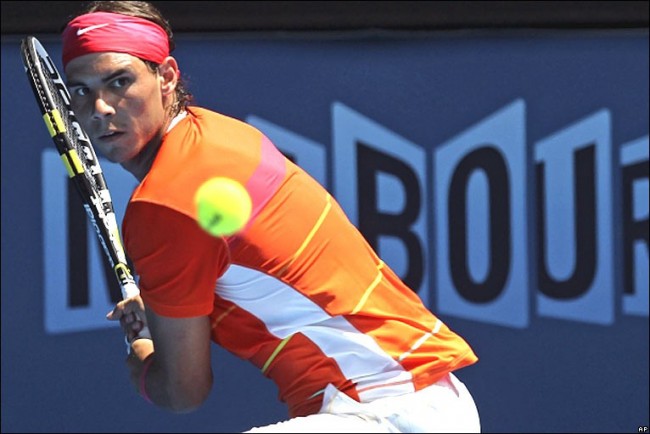
Do you have a Game? Notice two Factors!
The requirements of competitive sports during the race or on the day of the race can be summed up in two words (!): Energy and concentration. Two concepts that interact and create the conditions for ideal performance.
The energy that the athlete is called to “bring out” in the game is the necessary element to achieve his goal. It refers to the athlete who is active, in mental and physical readiness, with intense effort and perseverance, being in the best possible condition. It includes all the physical elements, which have been worked on during the year and give the athlete the opportunity to perform to the maximum. Although in the first phase it is considered a result of the athlete’s physical condition and physiology, nevertheless the release of energy is largely related to his mental state. Factors that determine the amount of energy that the athlete will “allocate” in the race, are his mood and desire to compete. The goal that has been set, the “why” to fight. Without a goal there is no direction and no way for the athlete to transform his work into activation. His mood is affected by his potential anxiety, doubts he may have developed about his level of readiness, fear of fatigue and lack of self-confidence. In such cases the athlete sees the race as something huge and himself weak in the face of the enormous dimension he has given to the race. Preparation is put in jeopardy, doubts develop, anxiety develops, one becomes vulnerable and underestimates oneself. For the doubt, Nietzsche had emphasized that he “poisons you without killing you”, meaning that with doubt you can participate in an activity, but you will not be in the best possible emotional state. Well prepared, the athlete has the ability to dispel any doubts, feel confident and “allow” himself to release the necessary energy. In the race you go with what you have, nothing more-nothing less and with the confidence and the goal to do what you can. The American swimmer with the world record of 8 gold medals at the 2008 Olympic Games, Michael Phelps, when asked before the games about his goal, had answered: “I would like when the games are over, reviewing my performance, to be able to say that I gave what I had to give, then I will be absolutely happy “. This is how the best athlete of all time judges success, simply chasing his “ideal” self.
When the athlete has achieved the accumulation of energy then the “only” left is to be focused. It is possible that he has prepared well but did not perform what he can because he failed to concentrate. It is necessary to emphasize that the gathering is not a process of the last week: there is a gradually evolving situation, the culmination of which is the struggle. In order to be able to concentrate 100% during the week of the race, it is necessary to be 99% a week earlier! Achieving concentration is perhaps the most difficult “technical” element that an athlete has to work mentally. However, it works and develops. But it requires desire and a plan! Requires spiritual work during preparation. There are many factors that affect concentration, it is inextricably linked to mood as the emotionally positive athlete concentrates more easily and beneficially than the athlete with doubts and negative thoughts.
The positive of the above elements, whether they concern the preparation of the athletes or the conditions of the race is that they are a personal choice of everyone and their improvement certainly goes beyond their personal capabilities, as long as there is a desire and a plan!

Why am I not confident ……?
The concept of self-confidence is related to the “sense of security” that one derives from oneself. It is the “confidence” that one shows in one’s ability in certain conditions, the pervasive belief that “one will succeed”. It provides the person with a positive feeling, pleasant mood, releases energy and determination. Even in difficult situations, the confident person will try hard enough and eventually “will get the job done”.
It is a concept that everyone is looking for, it is what parents would like their children to have, it is considered a “key” for human development and evolution. Seeking confidence, the obvious question relates to whether it is possible for anyone to acquire it. To find the way it is cultivated, one will need to “analyze” it in the components that make it up.
It is directly related to the concept of self-esteem (the emotional value of the self) and is built on it. It is difficult to “trust myself” if “I do not think I deserve it”. It is the basis and at the same time is powered by autonomy as “I trust myself knowing that it can work on its own”.
Its development refers mainly to how energetic-functional the individual is. The more actions one performs, the more mobile one is and at the same time “enjoys” the results of one’s actions, the more likely one is to show high self-confidence. Self-confidence involves a lot of activation, “it’s paradoxical to trust yourself while doing nothing!”
Reduced autonomy is also an obstacle to the development of the concept as it gradually creates in the individual dependence, a sense of inability, a possible sense of vulnerability, and finally a deficient self, which is closer to failure than to success. The opposite of self-confidence!
An obstacle to the development of the concept is also the heterogeneity of people from their environment, with the constant search for approval and recognition, the expression of behavior that tends to be submissive and ends up in the label of “capable but not autonomous” or “effective pawn”. The opposite of self-confidence!
Let everyone think about who you will entrust a task to…. We would look for someone we trust because he has done it again! We also look for this element in ourselves. The more often he activates and does things, the more likely he is to gain self-confidence. For this to happen she will need to try him, to understand that he can, that he is capable and he will succeed. By himself……!
